The Amiga-like thread in our current work is no longer just a visual reference. It is showing up in the way we name locations, arrange tools, make settings visible, package applications, and give the desktop a mood that still belongs to the person using it.
AlpinE is the modern Alpine-based workstation where we are testing that idea. AuziX is the wider operating-system experiment. They are not AROS, and they are not an AmigaOS replacement. They are our attempt to carry forward a few useful instincts from the Amiga era while keeping a current Linux base.
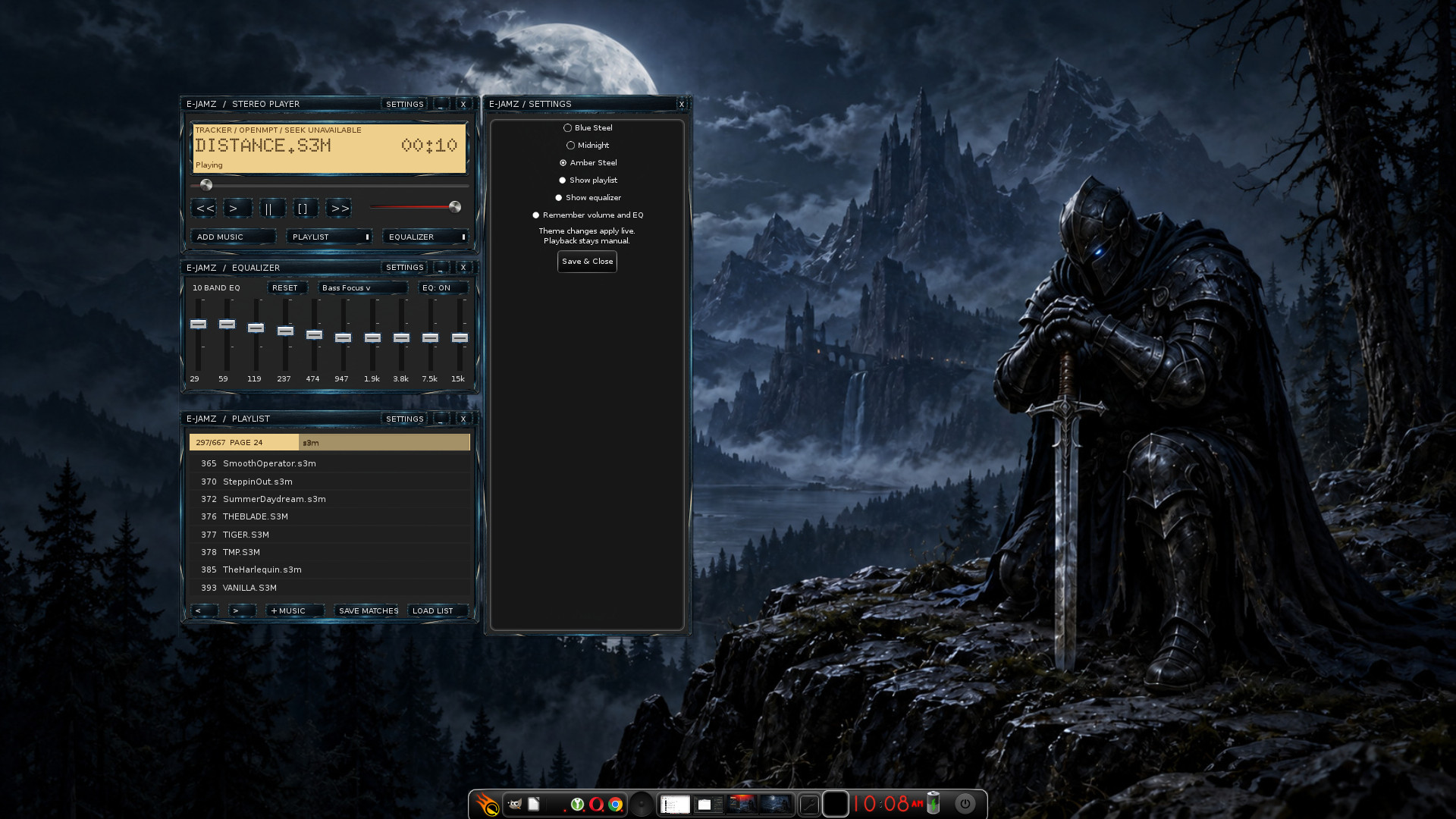
E-Jamz is a small but visible proof that the workstation can have native tools with their own character.
Named locations make the filesystem easier to talk about
Auzix Assigns is an early
filesystem prototype inspired by named Amiga locations. A read-only FUSE view
can gather ordered directories under names such as C:, Programs:,
Libraries: and Music: while leaving the original files where they are.
That is a modest feature, but the language matters. “Open the program from Programs:” is a more useful conversation than making every person remember which host path happened to contain the current checkout. The prototype is deliberately bounded: no global PATH replacement, no boot-layout replacement, and no promise that a writable copy-up model already exists.
The interesting part for us is the relationship between readable naming and safe boundaries. The view stays read-only, sources have explicit precedence, and the tool reports where a file came from. That feels Amiga-like without pretending that a modern Linux filesystem has become an Amiga disk.
A control panel that respects the desktop
E-control brings common workstation settings into a native Enlightenment/EFL panel. Appearance, displays, audio, network, Bluetooth, storage, printing, services and system information have a single place to be inspected, with actions separated from browsing.
The design goal is familiar from old desktops: the machine should tell us what it knows, and a setting should change because we chose an action rather than because a background helper guessed. Timed display trials, explicit apply steps, and scoped privileged helpers keep that spirit grounded in current operating-system constraints.
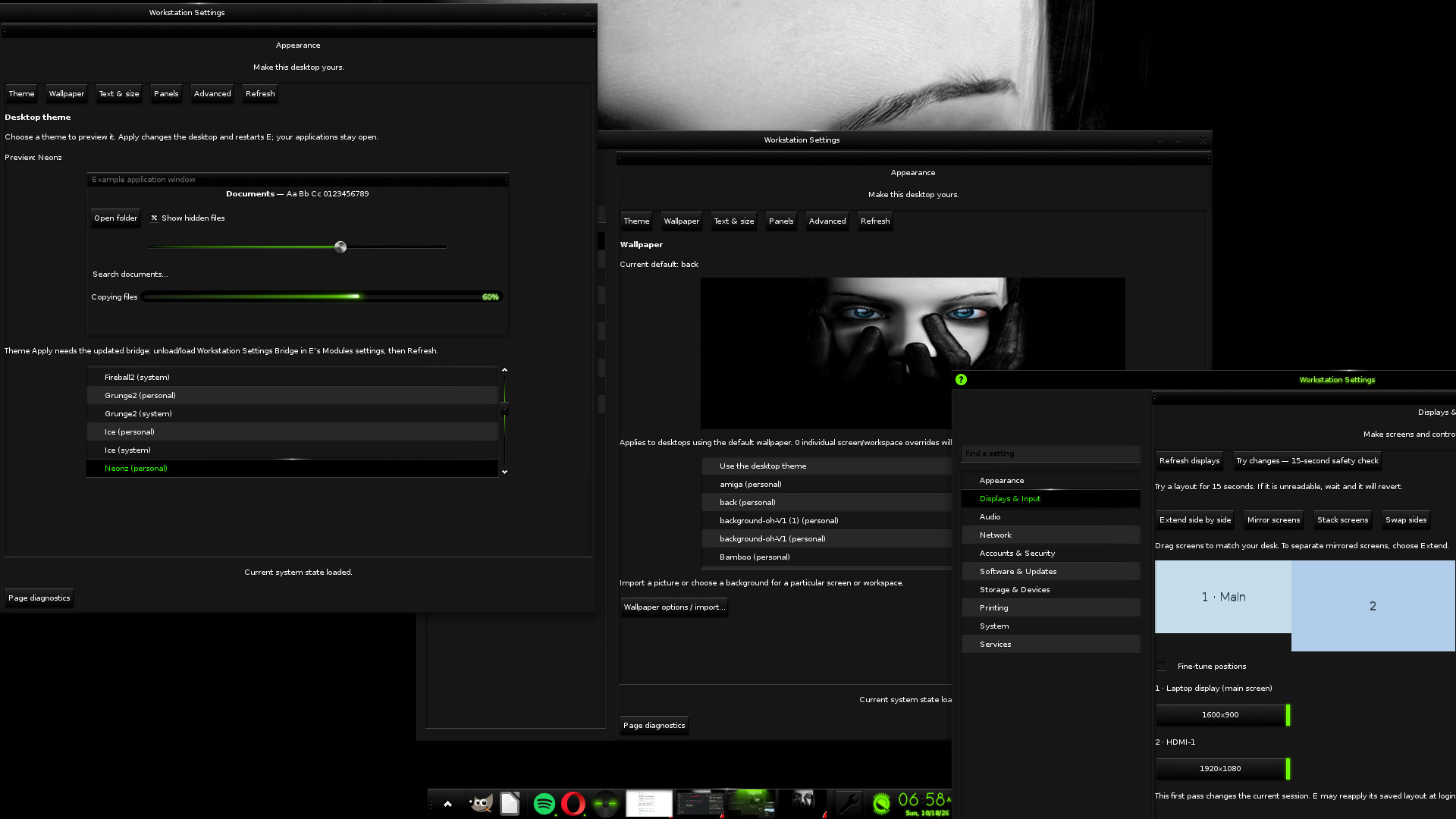
E-control's repository capture shows the settings surface we are iterating on.
Enaptic makes package state visible
Enaptic is the package-management companion. It follows a compact, Synaptic-like layout but is being built as a native EFL application for AlpinE. We can browse packages, filter by fields, queue marks, preview changes, and keep APK and reviewed Flatpak work distinct.
The visual connection to the Amiga-like idea is not the name or the skin. It is the insistence that the system show us the available choice, the installed state, the source and the transaction before anything changes. That is a desktop tool with a clear contract instead of an opaque one-click launcher.
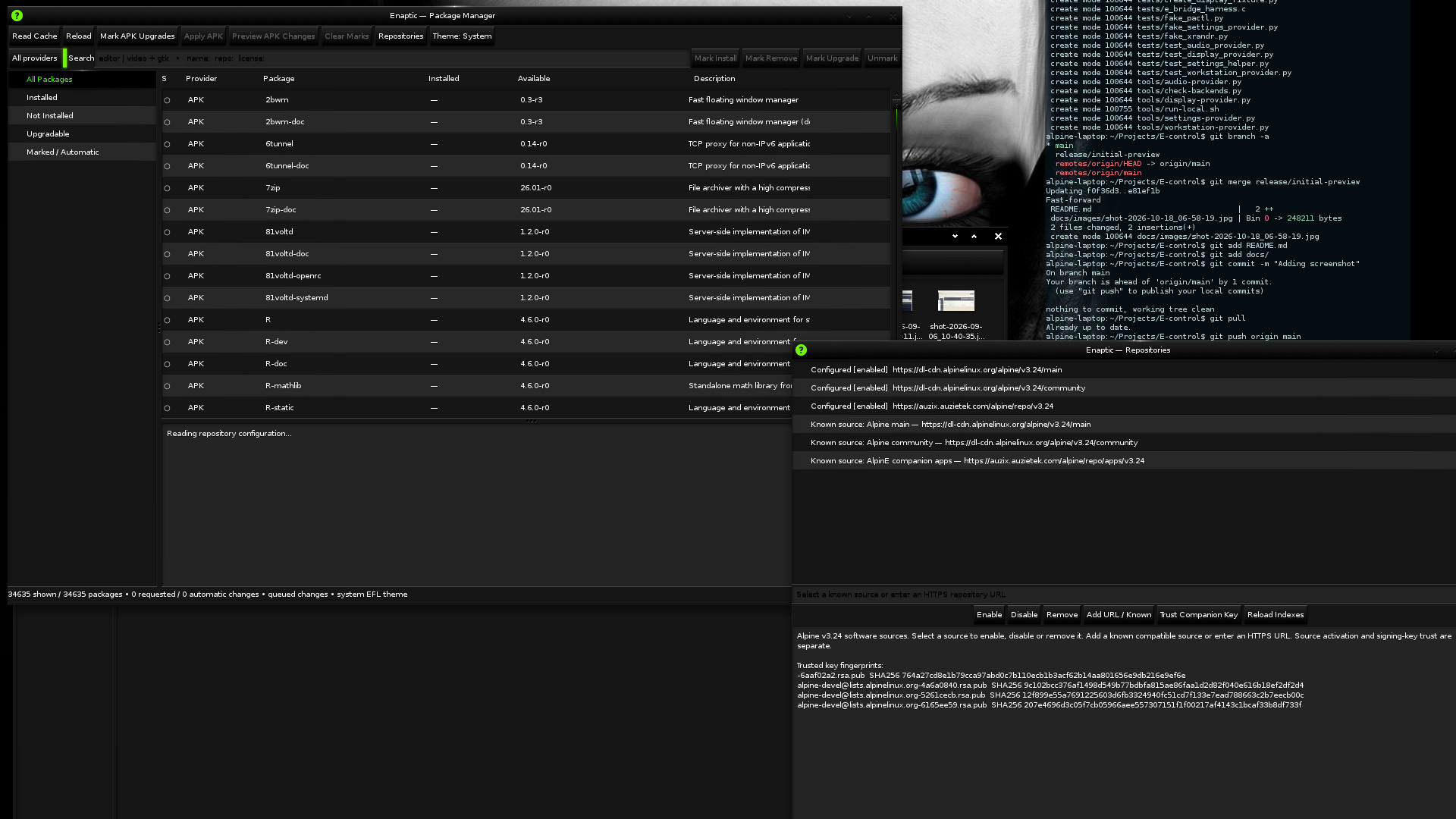
Enaptic keeps package choices, sources and transaction review visible in one compact surface.
E-Jamz and the theme are part of the same experiment
E-Jamz gives the workstation a native music tool: a compact player, playlist, tracker-format checks and rack-style equalizer controls. The BlackKnight E Theme holds the original wallpapers and theme work that give the desktop its visual direction.
This matters because a workstation is not only its package list. It is also the feeling of opening a tool and knowing that somebody cared about the controls, the spacing, the sounds and the way the work is arranged. E-Jamz is small enough for us to inspect end to end, which makes it a useful test of that standard.
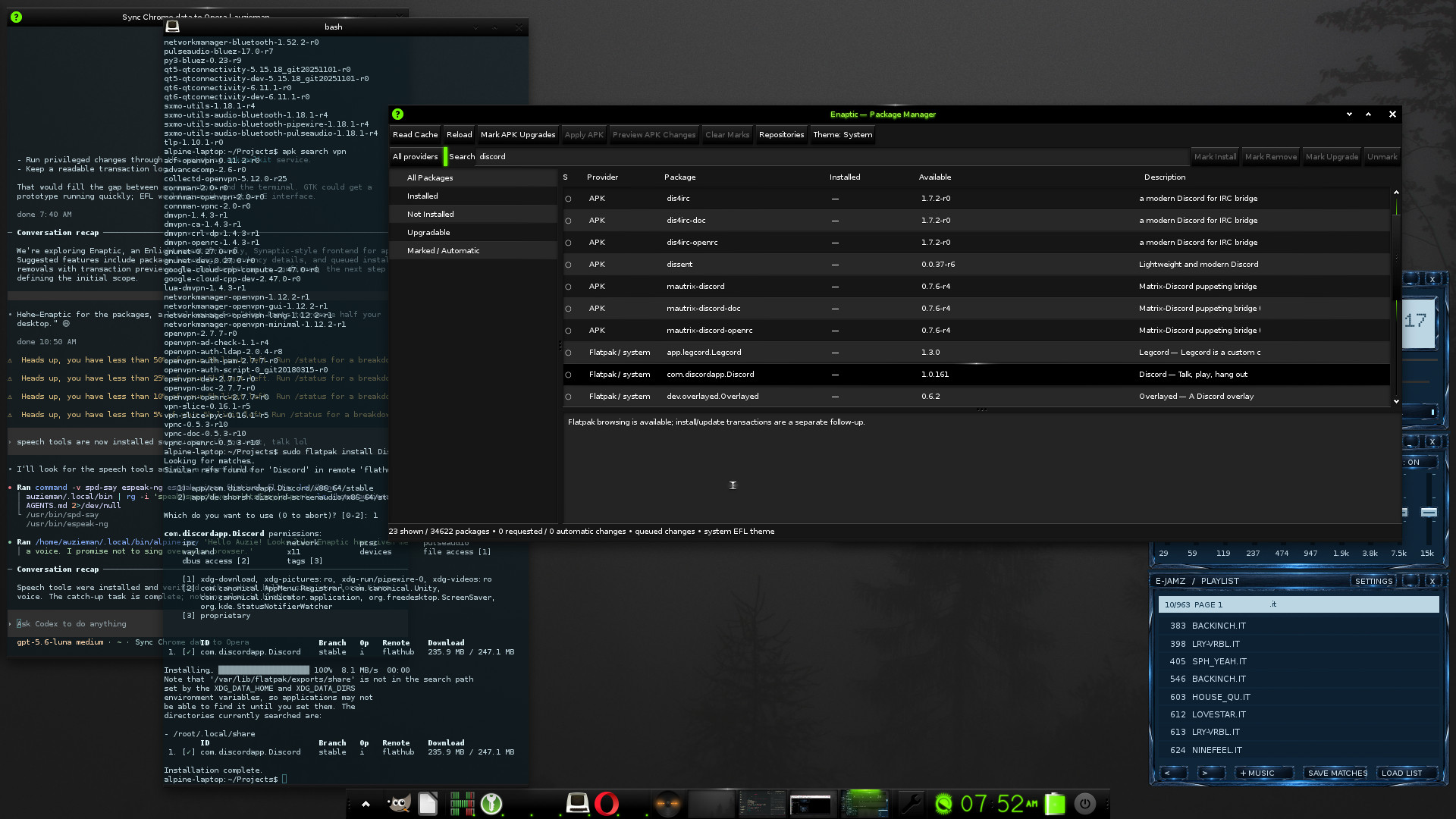
This local workstation capture shows the package and music tools living together in the same desktop session.
The cross-link to Linux Users
The Linux Users companion article follows the same projects from the systems side: Alpine packaging, OpenRC, native APK transactions, FUSE boundaries, provider integrations and validation limits.
Our AlpinE companion-app article holds the earlier packaging and theme notes. The Amiga-like resource page collects the upstream AROS links beside our own projects so the boundaries stay visible.
For us, the useful test is simple: does the laptop remain understandable, pleasant and honest about what is experimental? AlpinE, Assigns, E-control, Enaptic, E-Jamz and the theme work are separate projects, but they are now testing the same answer from different directions.
Screenshots: Auzietek AlpinE and E-Jamz work. Project status and limitations remain defined by the linked repositories.