In a few years this whole stack — receipts, fail-closed packs, human approval before mutation, matching the job to the density — may look like early groundwork for systems people will casually call “real AI” or AGI. That is fine as a horizon. It is a poor description of what is in the room today.
An LLM is closer to a giant smart macro, or an autowriter with enormous reach: a machine that translates human intent into words, code, images, and other artifacts at a scale no mortal typist can match. That is already valuable beyond any reasonable doubt.
It is not a mind that already holds your assign list, your Jinja contract, or your custom volume map. It is a dense pattern engine that writes extremely well inside what it has seen a lot of, and invents confidently outside it.
The companion Linux Users piece, When the map is not FHS, is the field evidence. This note is the category.
Imitated Intelligence, not a new species
This split is not new in this house. Years ago, on a Modular Robotics and Automation System WIP note, I already refused to call mimicry “intelligence.”
Artificial Intelligence was the Deep Thought problem: an answer without a question. Imitated Intelligence was the honest category — AIML, game “AI”, FX — systems that look clever until the real question can even show up. Meta-objects that adjust by use; modular robotics as the platform; Python as the glue.
The page is still there if anyone wants the provenance:
Modular Robotics / Automation System WIP
Who knows. Someone might read it again someday.
Agents are a weave, not a mind
What the industry now markets as agents and MCP servers is, in that older vocabulary, a weave of Python scripts built for specific ML and AIML uses.
I have already built those bridges in the lab: Ollama, tickets, pipeline receipts, the boring glue between a human desk and a model. The branding is new. The weave is not.
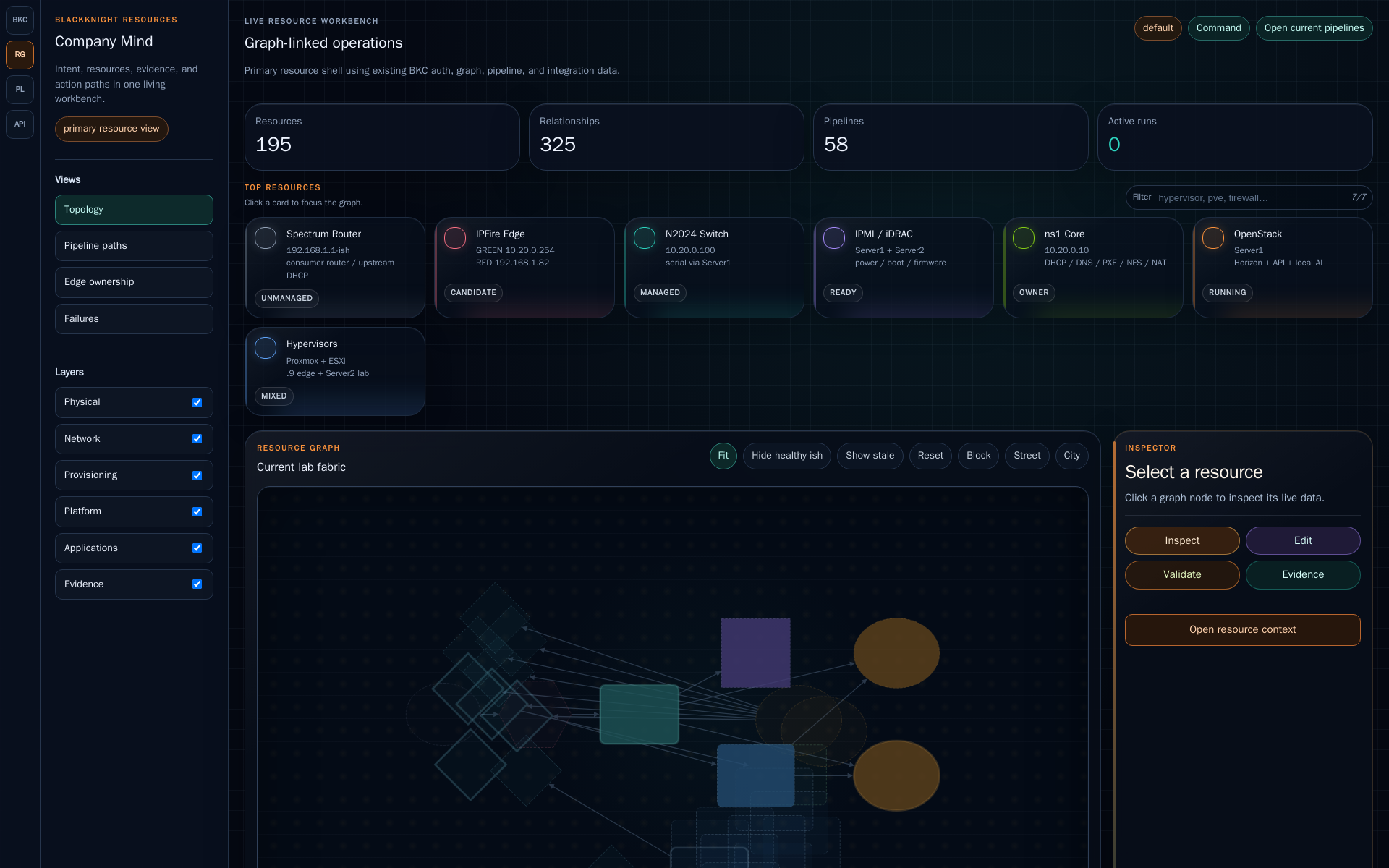
House channel tooling sits in that same category. It is older than the current agent wave. The public point is only this: we already had a paper trail between intent and mutation. Calling it an “agent” does not make it a mind.
The confusion is treating the autowriter as the operator. The useful move is treating it as the most powerful macro printer we have ever had — then keeping the map, the template, and the paper trail in human (or house) hands.
Horizon, and why dreamers still matter
I do think man and machine will coexist as equals in the not-so-distant future. Not because today’s autowriter already is a person, but because the useful work is teaching the weave to keep a map, a receipt, and a human veto while the density improves.
I even wanted to capture the cycle and patterns of people — smart glasses, a sort of forever-us — so the next weave would have more than Stack Overflow and FHS to train on. That is a dreamer’s note. It belongs next to the bush problem, not instead of it.
Dreamers name the horizon. Operators still have to ship eighty lines of bash, a Jinja contract, and a fail-closed pack this week.
What this changes in the lab
If the model is a smart macro, the house rules stay boring:
- write the sparse contract outside the chat;
- prefer
bkc-cli, env, and templates over a clever one-off; - treat a green run as necessary, not sufficient;
- keep a human veto on mutation.
That is human-led AIOps. Not replacement. A cleaner partnership.
The Linux Users article is the bush. This one is the name of the creature that keeps driving into it.
Assumptions and scope
- Category note from Auzietek ThinkTank, September 2026.
- Does not claim AGI, factory completion, or that today’s models are persons.
- Companion: When the map is not FHS.
Related lanes
- ThinkTank / Auzietek: human-first automation and naming the tool honestly.
- Linux Users: density, AlpinE, and custom-layout bushes.
- BlackKnight: receipts, graphs, and the weave you already paid for.