BlackKnightController is built around a simple idea: physical infrastructure should be as rebuildable as the software we deploy on top of it.
That does not mean pretending a rack server is a container. It means respecting the full lifecycle:
- power control through IPMI or iDRAC;
- boot intent through PXE or virtual media;
- operating system installation;
- post-install configuration;
- application deployment;
- validation and evidence capture.
Each step is ordinary IT work. The value comes from joining those steps without burying them under a control plane that hides the useful details.
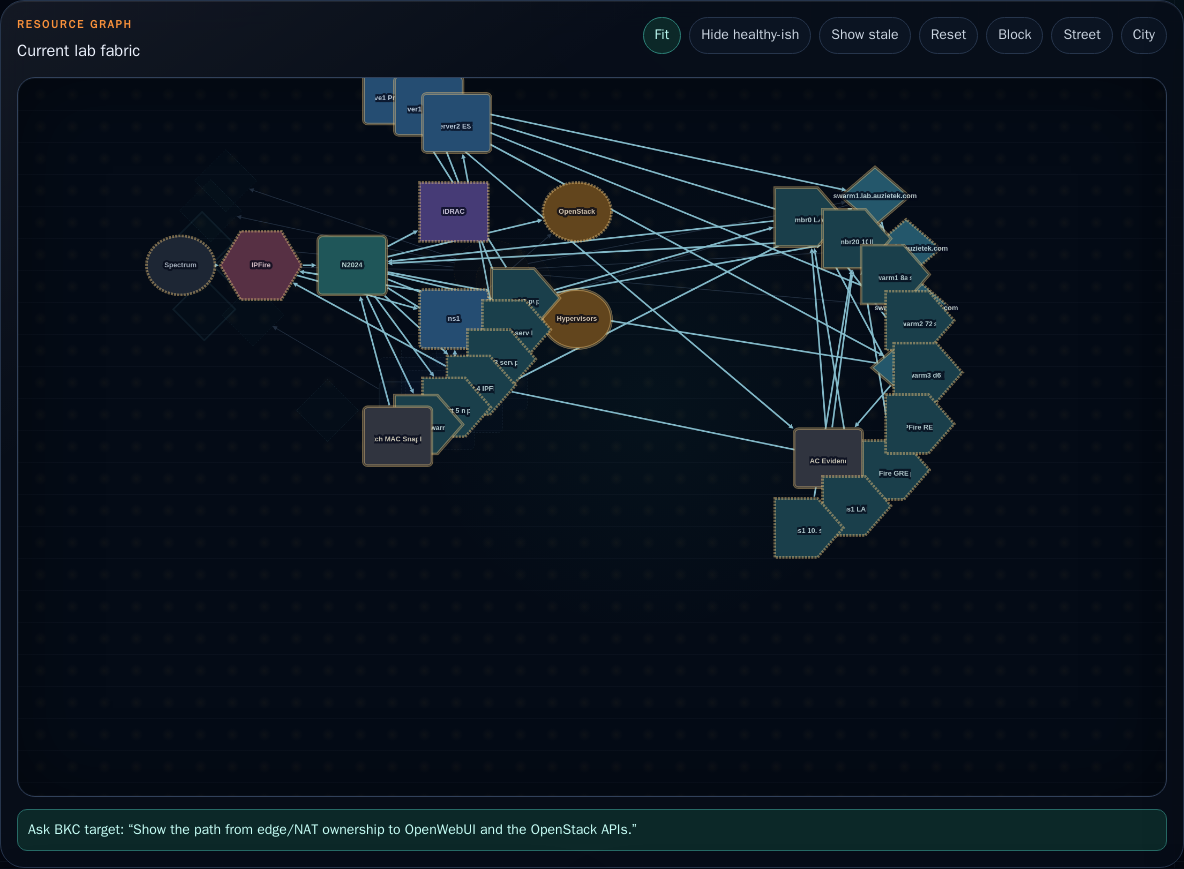
BlackKnightController can turn the lab edge into a readable story: upstream router, firewall, managed switch, DHCP/DNS/PXE, hypervisors, service networks, and the evidence that connects them. The important trick is not the picture by itself; it is that the picture can be regenerated from live BKC data.
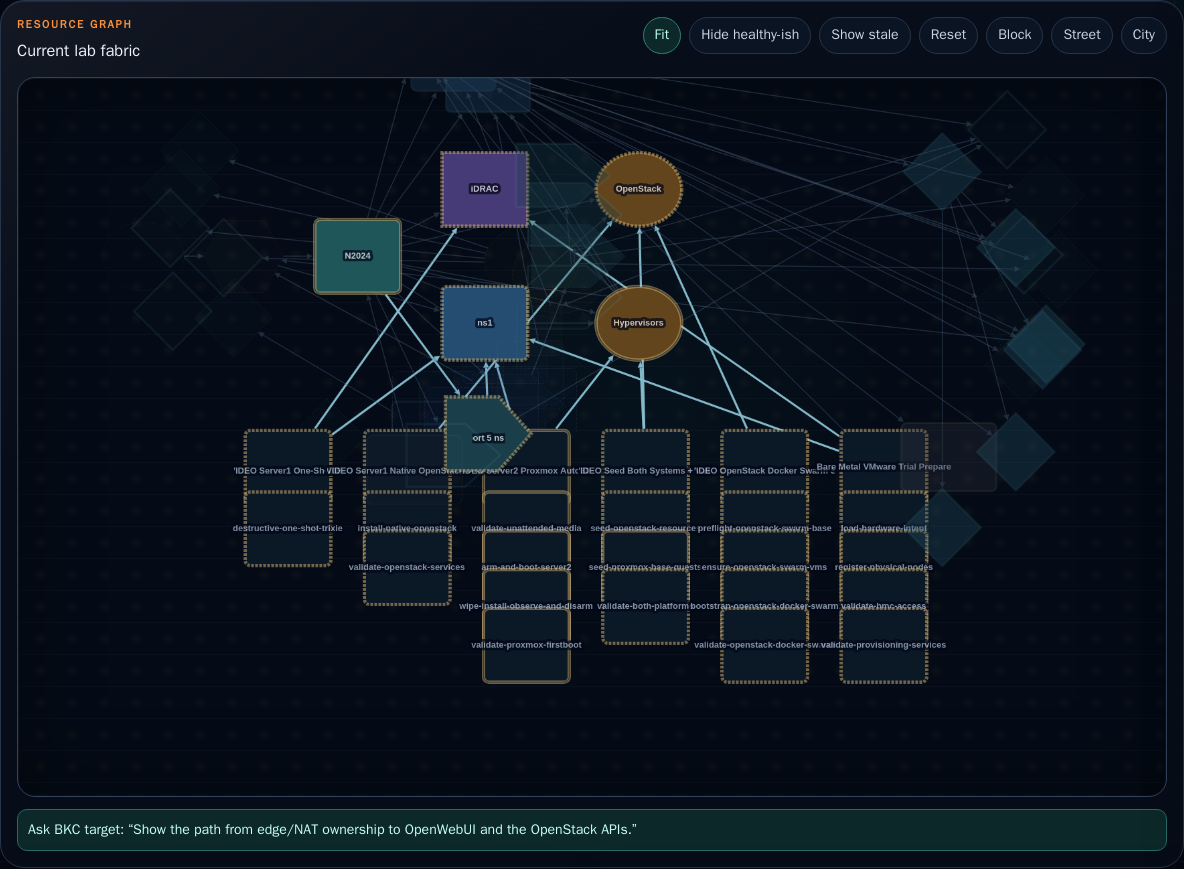
Pipeline paths show the other half of the model: actions are not floating shell commands. They relate back to machines, stages, services, and validation evidence. That is how a lab rebuild becomes a repeatable operating pattern instead of another heroic Saturday.
Why this matters
Small teams often live in the uncomfortable middle. They have enough infrastructure to need discipline, but not enough staff to absorb heavyweight platform complexity.
BlackKnightController is aimed at that gap. It keeps the action model close to how engineers already work: SSH, shell, APIs, templates, files, and validation.
The difference is that those actions become reusable, visible, and explainable.
The teaching pattern
When a deployment fails, the goal is not to panic. The goal is to find the nearest truthful boundary:
- did the machine power on?
- did it boot the intended installer?
- did the disk layout match the boot mode?
- did the service come up?
- did the public edge route to it?
Good automation does not remove these questions. It answers them faster.
The physical-first model
Most infrastructure tools start after the operating system exists. That is fine for software configuration, but it skips the part of the story where many lab and small-office failures actually live.
BlackKnightController treats the machine before the OS as a first-class object:
physical_machine
  -> controlled_by -> bmc
  -> has_interface -> network_interface
  -> attached_to -> switch_port
  -> uses -> provisioning_profile
  -> booted_from -> image_asset
  -> produces -> validation_evidence
That model lets a Dell server, an iDRAC, a switch port, a DHCP lease, a PXE profile, and an installer receipt belong to the same story. The hostname may not exist yet. SSH may not exist yet. The machine is still manageable because BKC can reason from power, network, firmware, and boot evidence.
The ordinary steps are the superpower
The core actions are intentionally normal:
- ask IPMI or Redfish for power state;
- set the next boot device when the hardware allows it;
- render an iPXE or installer profile from inventory;
- serve kernel, initrd, ISO, preseed, answer, or kickstart assets;
- observe DHCP, HTTP, console, and first-boot SSH evidence;
- run the post-install checks that prove the target is ready.
That is why the model travels. A shell script, Python script, config file, preseed, cloud-init document, or ESXi first-boot helper can all be treated as a template: render it with known inputs, ship it, run it, validate it, and keep the receipt.
What “hardware as code” should not mean
Hardware as code should not mean pretending hardware is risk-free. It should mean the destructive parts are explicit and reviewable.
For a lab or rebuild target, wiping disks is a normal installation act. For a production target, the same action should require stronger identity checks, backups, approval gates, and probably a human pause. The point is not fear; the point is matching the guardrail to the environment.
BlackKnightController’s job is to keep that distinction visible. The pipeline should say what it will erase, how the target was identified, what firmware mode it expects, what evidence proves success, and what fragment is known-good enough to reuse.